


LABEL PRINTING TECHNOLOGIES
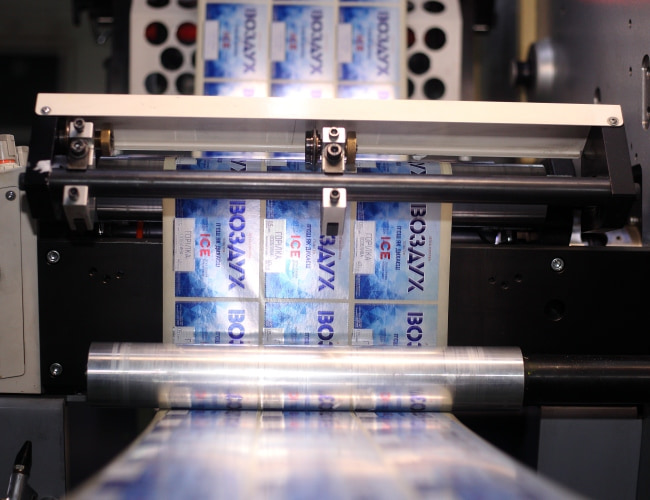
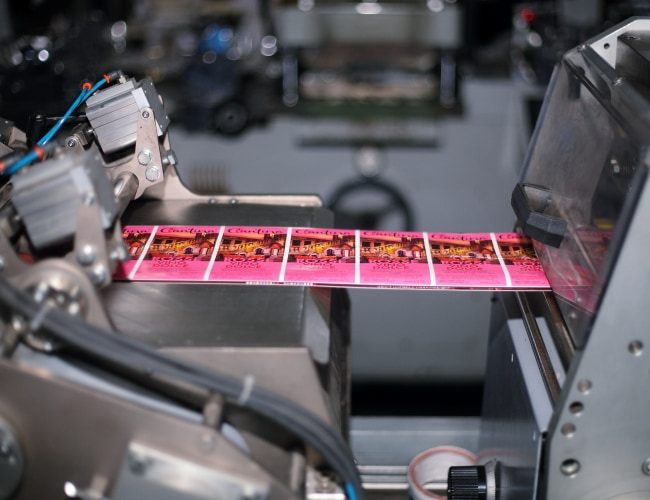
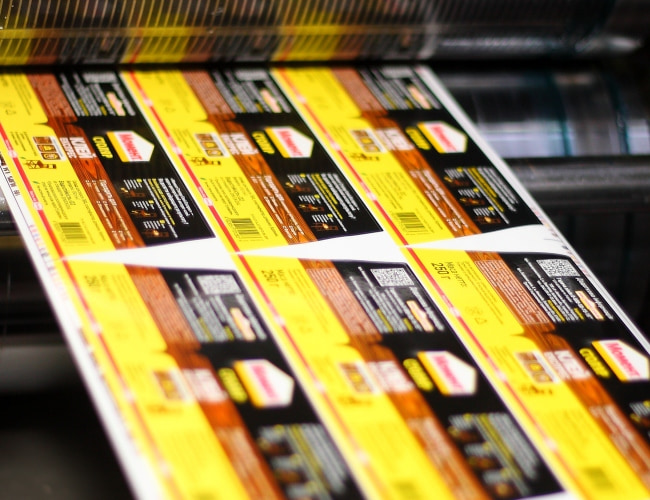
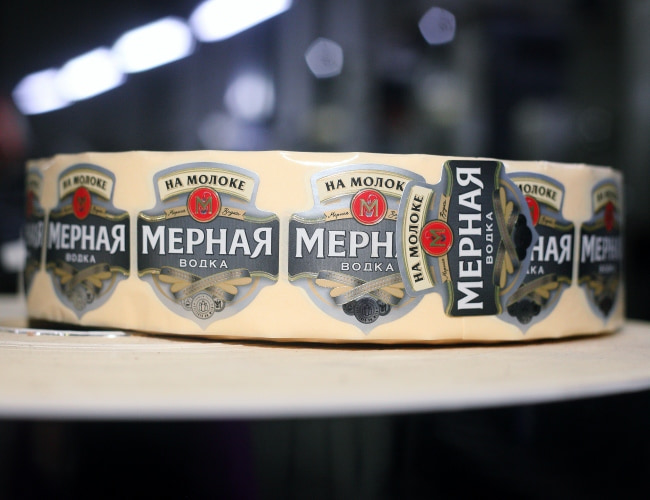
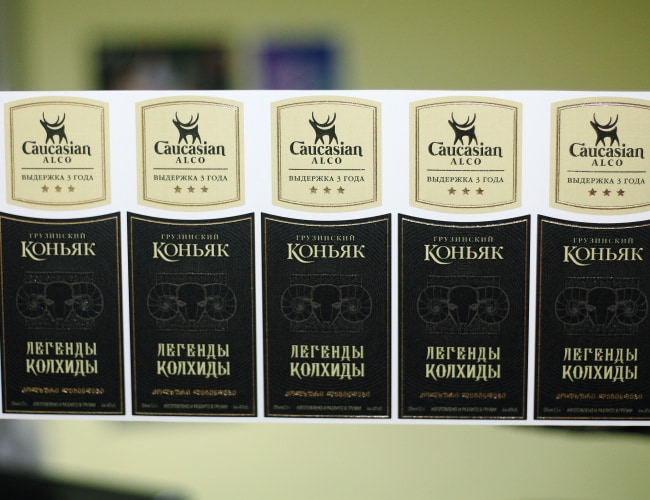
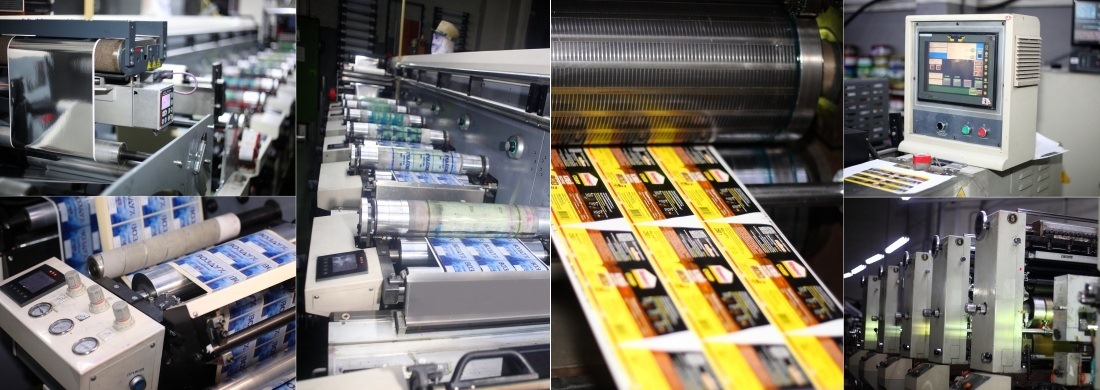
In the technological process, we use one of the most popular label printing methods - flexoprint. Our production facilities allow us to use the following printing technologies:
1. Foil stamping (hot and cold);
2. Relief stamping;
3. Blind embossing;
4. Screen printing;
5. Lamination.
FOIL PRINTING
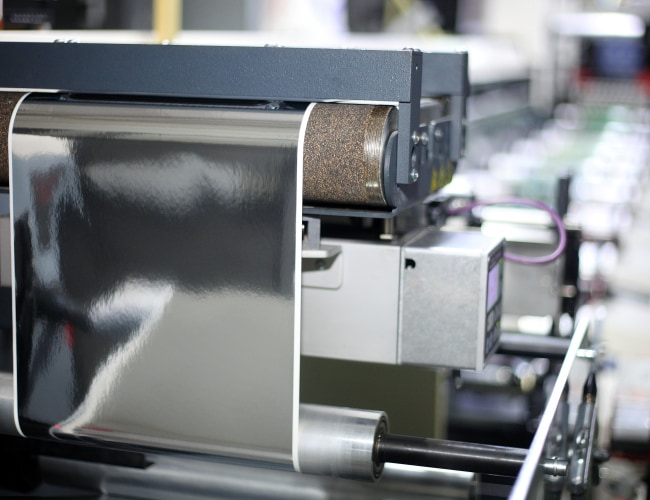
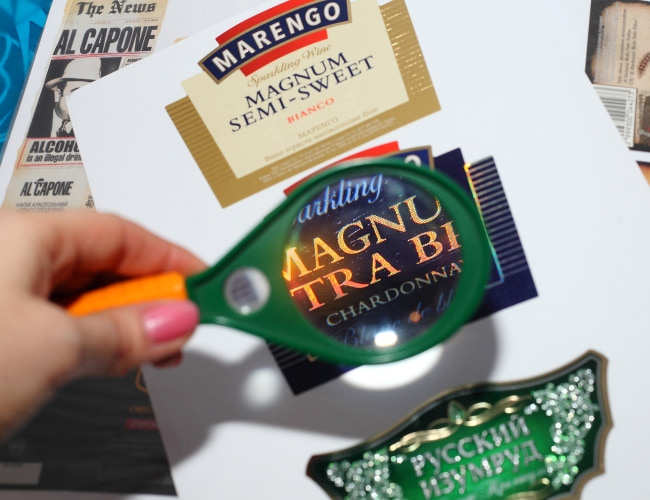
For a spectacular, bright style, the foil stamping method is used. The effect of metallization creates status and attractiveness, and embossing provides volume. Currently, two main foil stamping technologies are distinguished:
- hot;
- cold.
Advantages of hot stamping:
- Hot process. The foil, heated to high temperatures and pre-lubricated with glue or wax, is pressed to a so-called stamping die, which determines what pattern will be impressed on the object..
- During the heating process, the glue melts and the foil layer sticks flawlessly to the surface.
- The embossing creates a perfect adhesion to the surface to be coated, so that any colour can be applied on dark materials.
The weaknesses of the method are length and complexity of the process. And due to the fact that each new product requires its own stamping die, the cost of printing increases.
Advantages of cold embossing:
- Embossing also implies applying foil on the object, but it is applied in a different way - with printing equipment and UV varnish.
- The varnish is applied to the printing unit, where it is partially polymerized by UV rays, then the foil is applied on it.
- The final polymerization process takes place for several more hours in a roll.
- Moderate price. Conventional dies are used, which makes the process more cost-effective.
- You can take any material that does not endure high temperatures.
The main shortcoming of cold foil stamping is that the material surface must be smooth, which is not always possible.
RELIEF STAMPING
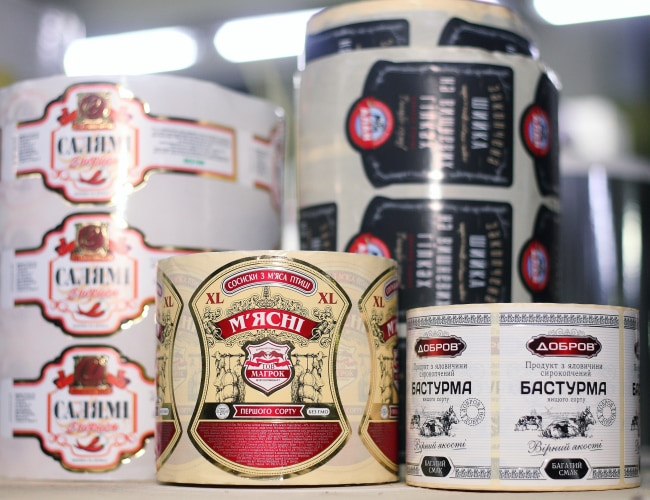
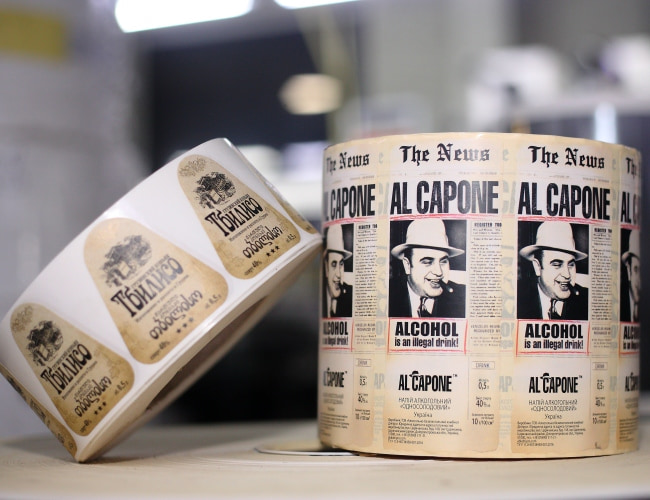
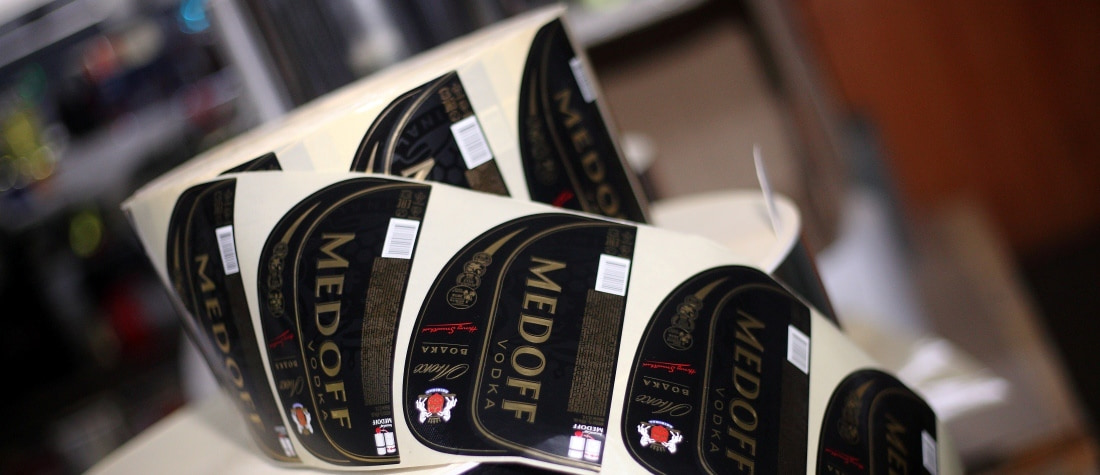
Nowadays, about 40% of clients choose the relief stamping, which gives the label an original look and exclusivity. In most cases, the relief stamping technology is used to decorate labels of alcoholic beverages, stickers for perfumes, food products and household chemicals.
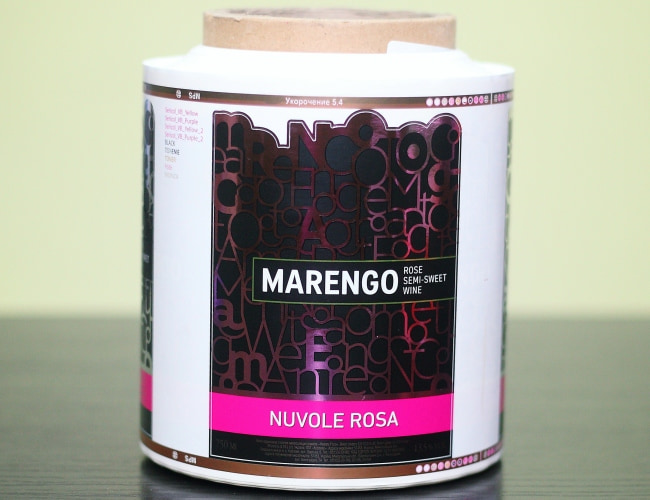
The relief stamping provides an additional texture to the image. According to this method, the image is applied with a stamp with an in-depth pattern and a bulged matrix located on the back of the substrate. The relief stamping enables us not only to give a considerable volume to an already printed image, but can also be used separately.
The relief stamping may be single-level (all images are on the same height) and multilevel (the image details are raised to different heights, thus giving the image a full three-dimensional effect). The relief stamping looks best in a combination with the foil stamping
BLIND EMBOSSING
Blind embossing is a simplest way of embossing without ink and foil.
The relief block is pressed into the product surface. The resulting sunk image elements lie in one plane. For these types of work, the relief block with high relief (brass or magnesium) is used. The blind embossing can be performed both with and without heating. The printout quality is largely determined by effort..
SCREEN PRINTING
The rotary screen enables creating the most dense and textured ink layer when printing labels. Depending on the tactile effect required, the thickness of the ink layer can vary significantly. Images on the label and other printing products in the screen printing method are characterized by high definition, brightness and saturation of colours.
The rotary screen is mainly used to print labels on transparent materials. This label gives the product a premium look at lower costs for packaging production. In general, the use of screen printing technology greatly enriches even the simplest materials and emphasizes the uniqueness of any design.
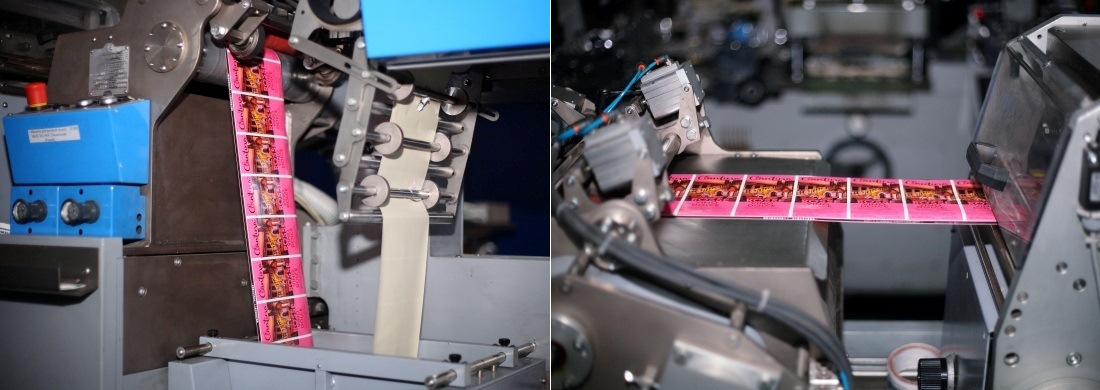
The application of screen printing widens the range of options for label finishing by using inks and varnishes with special effects:
- metallic inks;
- varnishes with various pigments - pearlescent, interference (pigments that change colour depending on the viewing angle), glitters;
- structured and tactile varnishes - with the effect of “sand”, “velvet”, textured tactile varnish of different heights.
LAMINATION
Lamination is the process of applying a transparent film called laminate to printed products. The main objective and goal is to protect finished printed products from external factors and significantly extend their life. These may be both moisture and dust and mechanical effects. Lamination makes it easy to clean the product from impurities as well as to tolerate contact with moisture.
The advantages of such product are its lasting quality, visual beauty and increased product density.
INKS FOR FLEXOGRAPHIC PRINTING
Inks play an important role in the flexographic printing process. Printing inks determine many printing, technical and consumer properties of a printout, as well as the very possibility to print on any material and obtain an image of a certain character (raster, line).
Depending on the method of fixing on the printout, all flexographic inks can be divided into several types:
- Water-based inks that are fixed by absorption and evaporation;
- Volatile solvent-based (usually alcohols or alcohol-soluble inks) that are fixed by evaporation;
- UV-curable, that are fixed by UV radiation.
Water-based inks are considered to be the most environmentally friendly and convenient in operation. The main solvent in them is water or a mixture of water and alcohol. Water-based inks are intended, first of all, for printing on absorbent surfaces (paper and cardboard). It is not possible to print on any synthetic film with such inks due to their poor adhesion to the films. When using water-based inks, the image on a printout is matte, which is sometimes preferable to a glossy one. It is significant that disposal of water-based inks and washouts is much more complicated and related to higher costs than disposing of other flexographic inks..
Volatile solvent-based inks are fixed by evaporation of the solvent. Components of solvent-based flexographic inks can be combined in the following proportions:
- solvent - 40-60%;
- pigment - 15-40%;
- film former - 10-15%;
- additives up to 5%.
Solvent-based inks are less environmentally friendly, but cheaper than water-based ones. Furthermore, they have much better adhesion and the obtained printout has a higher gloss compared to printing with water-based inks.
UV-curable inks are becoming more popular because they ensure the best printing results - high ruling of a raster image, colour rendition accuracy, adequate reproduction of all colour casts, stability of colour balance during printing, short fixing time. They have a constant viscosity, which ensures that the colour parameters of printing remain unchanged. These inks do not contain solvents and are comprised mainly of a bonding agent (50-65%), pigment (20-40%) and various additives (10-20%). The bonding agent is a photopolimerizable composition which includes monomer, oligomer and photoinitiator.
These inks have sufficient adhesion to any substrate. They are particularly suited for use in the food and pharmaceutical industry, as they are tasteless and odourless.
In our production we use mainly UV-curable inks.